Skip to content
Who We Are
About
People
Offices
News
What We Do
Architecture
Interior Design
Planning
Zoning Entitlements
Historic Preservation
Our Work
Civic & Cultural
Faith & Community
K-12 & Higher Education
Mixed-Use & Multifamily
Office & Workplace
Retail & Hospitality
Contact Us
General Inquiries
New Project Opportunities
Careers
Internships
Login

In one of Dallas’ most historically significant neighborhoods, a community-centered master plan reimagines connectivity, resilience, and opportunity for generations to come

The Bottom Master Plan

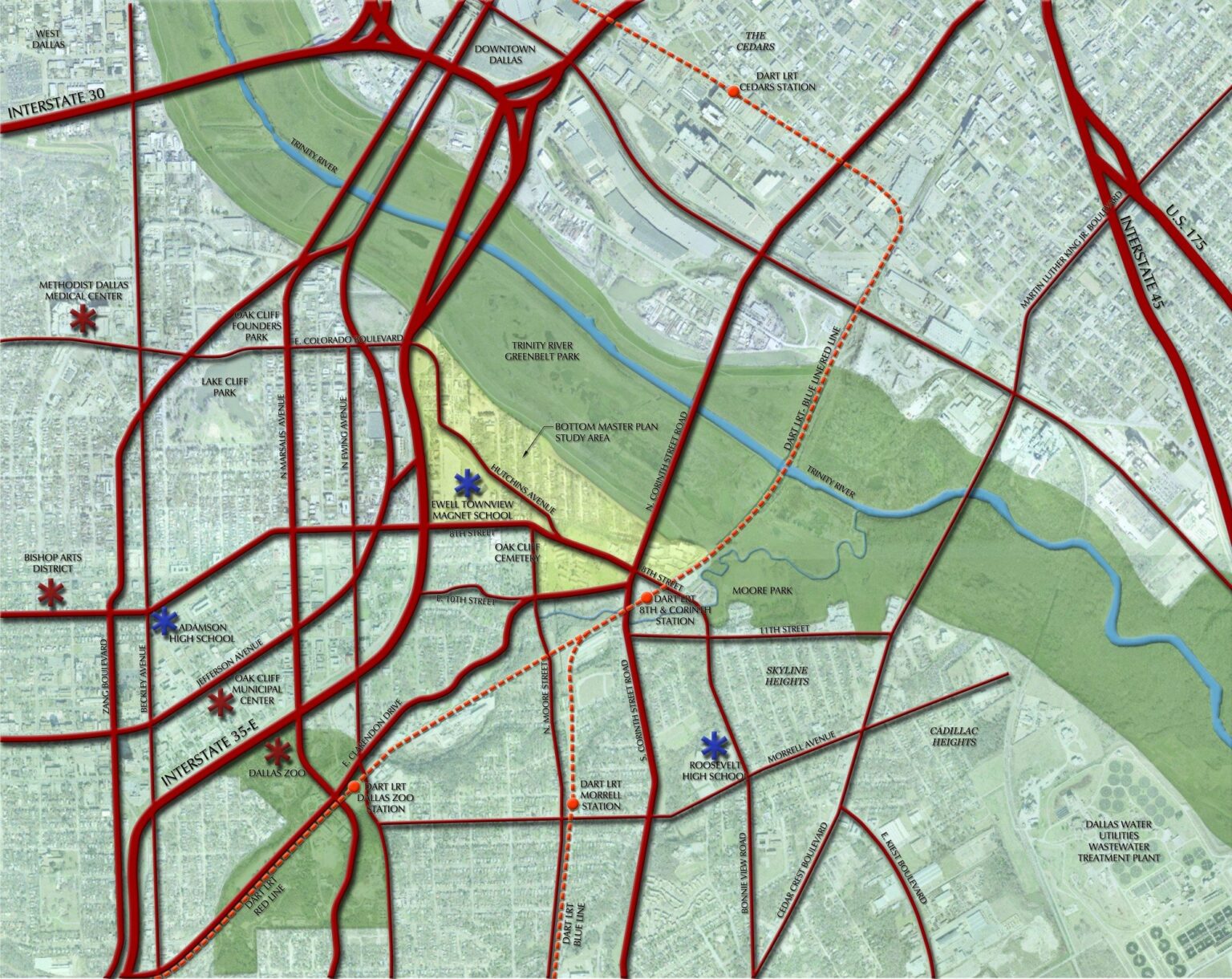
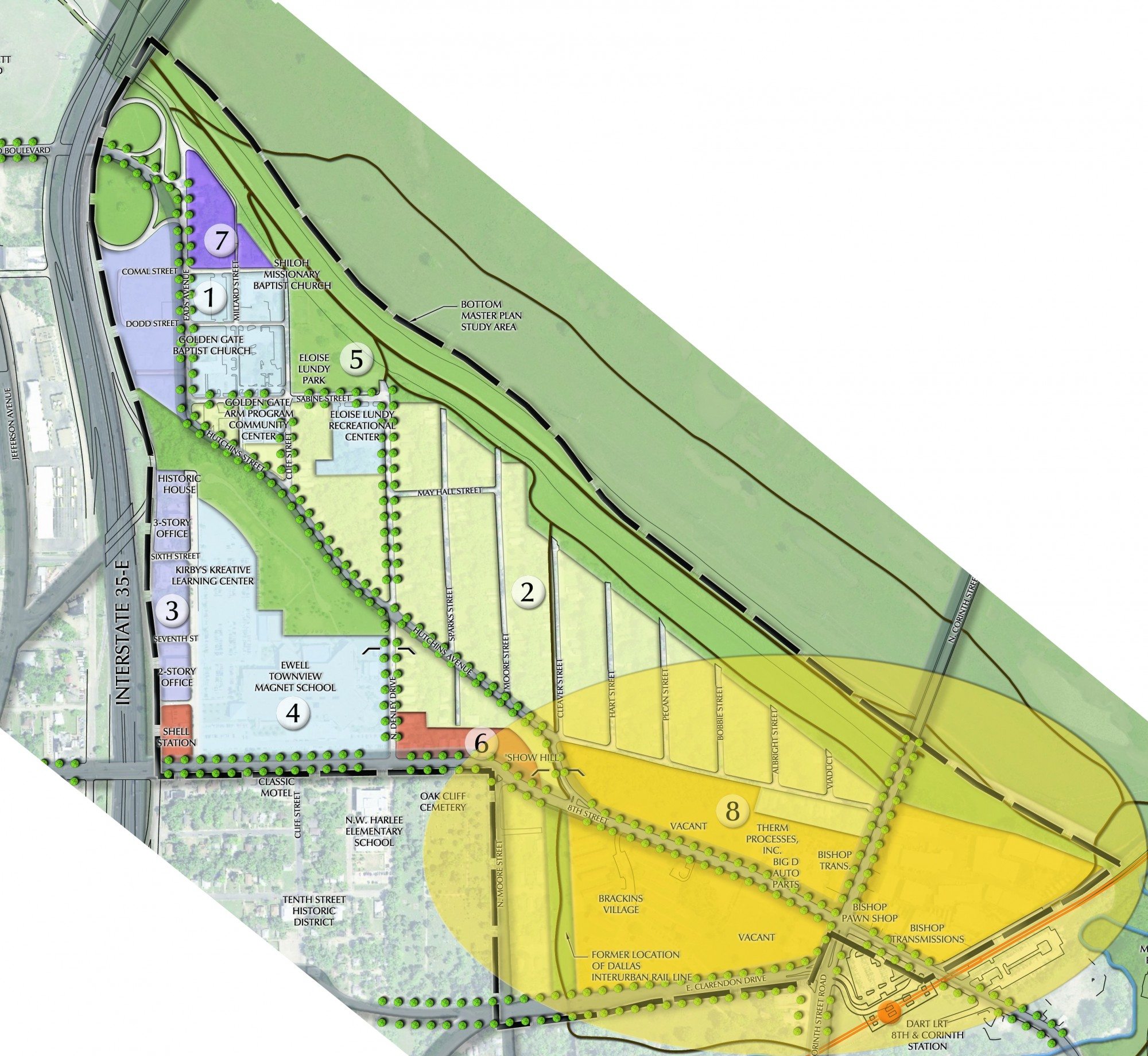
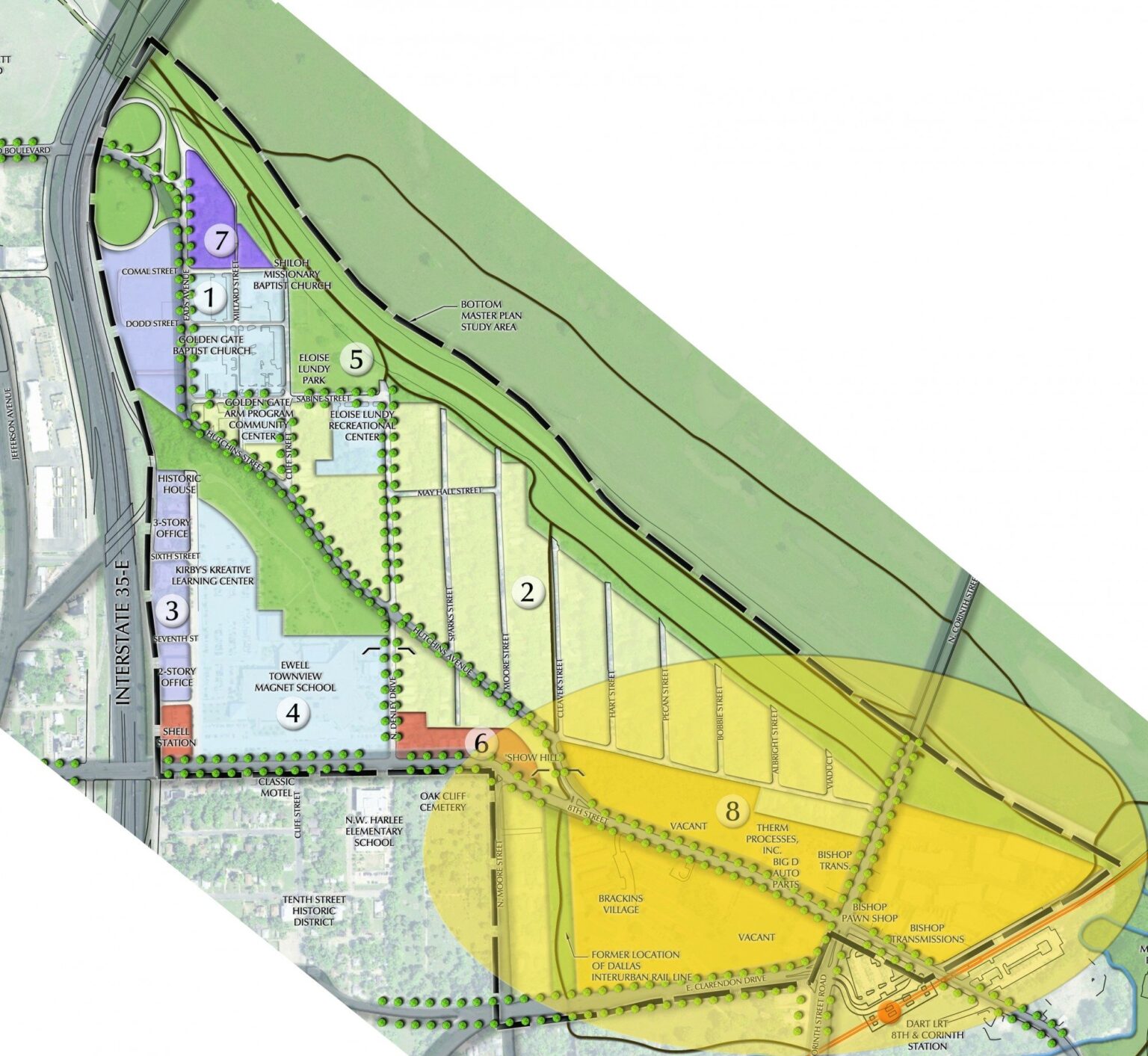
The Bottom is one of the 23 primary study areas that made up the City of Dallas’ Trinity River Corridor Comprehensive Land Use Plan in 2002. This historic area, adjacent to one of the City’s three former Freedman’s towns, frequently flooded before the construction of the Trinity River Levee system. The site’s 90-acre master plan aims to stabilize the existing residential neighborhood while establishing design parameters to guide future development, ensuring compatibility and sensitivity to the area’s historic and cultural context.

The master plan and its corresponding development guidelines will serve as a framework for the City’s Trinity River Corridor Office as it begins to rezone the property. This initiative is crucial for both the Bottom’s and the Trinity River Project’s role as a new “front yard” for the City. The plan envisions a resilient path forward, integrating community feedback and fostering a sense of community through connectivity to future and existing park amenities, walkable streets, and appropriate residential architectural forms.

The urban structure and guidelines area plan, adopted in April 2015, includes detailed guidance for public area development to encourage private investment and outlines priorities for public realm improvements. The plan subdivides the overall study area into five distinct “Area Visions,” each tailored to the future development characteristics of specific sections of the neighborhood​

Civic & Cultural

Exterior perspective of the Center for the Arts showing the glass-clad performance hall rising above a stepped concrete base, with landscaped terraces buffering the freeway and creating a prominent campus gateway.

A layered campus for creative work, shaped by sound, space, and community

Center for the Arts

Dallas, Texas / Unbuilt

Elevating the Oak Street District experience through purposeful infrastructure and unified district identity.

Roanoke Main Street Parking Garage & Oak Street District Signage

An interplay of light, shadow, and transparency creating a dynamic visitor experience

Dallas Holocaust Museum

Dallas, Texas / Unbuilt

Architectural rendering of a public broadcast center with an amphitheater and large screen in Downtown Dallas.

GFF’s design for the broadcast facility responds to its unique topographic and urban context, carving out moments of pause, projection, and public connection along the Katy Trail

Public Broadcast Headquarters

Dallas, Texas / Unbuilt

Our People

Jason Cave

Principal
Director of Civic Practice

Garrett Barker

Associate
Studio Director

Maria Gomez

President
Chief Practice Officer

Jon Rollins

Principal

Blake Thames

Associate Principal
Design Director
Contact
Ready to do something memorable together?
Let's Collaborate.

elevating human experience

and strengthening community

through our craft

  • Follow Us On Instagram
  • Follow Us On Instagram
  • Dallas
  • Dallas

3030 Nowitzki Way
Suite 400
Dallas, Texas 75219
(214) 303-1500

  • Austin
  • Austin

114 West 7th Street
Suite 200
Austin, Texas 78701
(512) 807-0433

  • Fort Worth
  • Fort Worth

1701 River Run
Suite 800
Fort Worth, Texas 76107
(817) 303-1500

  • Privacy Policy
  • Privacy Policy
We use cookies to enhance your experience on this site. By browsing our website, you agree to our cookie usage. No personal details are stored in the process.