A dense high-rise project gives up its footprint to carve out a lush, walkable green pocket for the neighborhood.
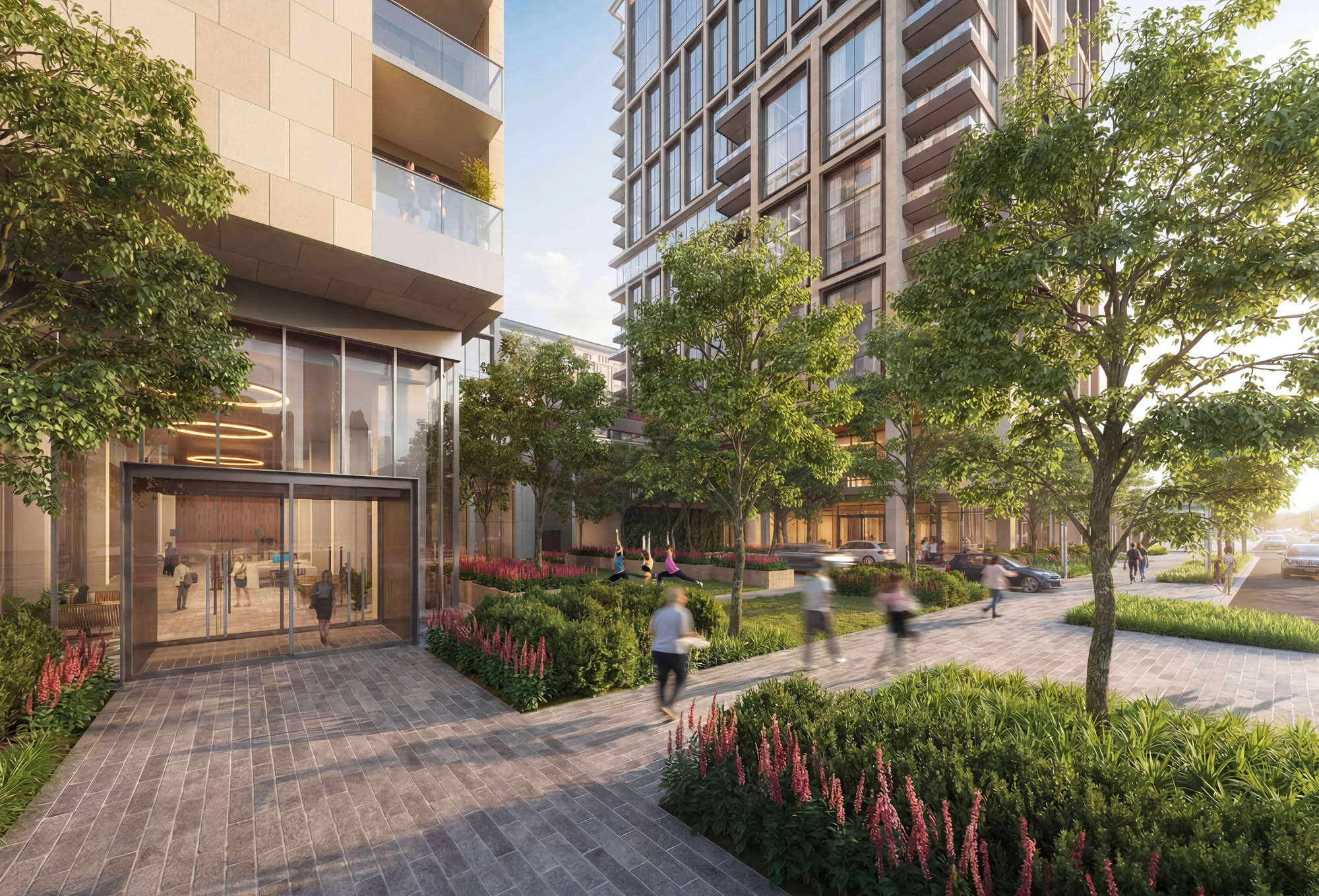
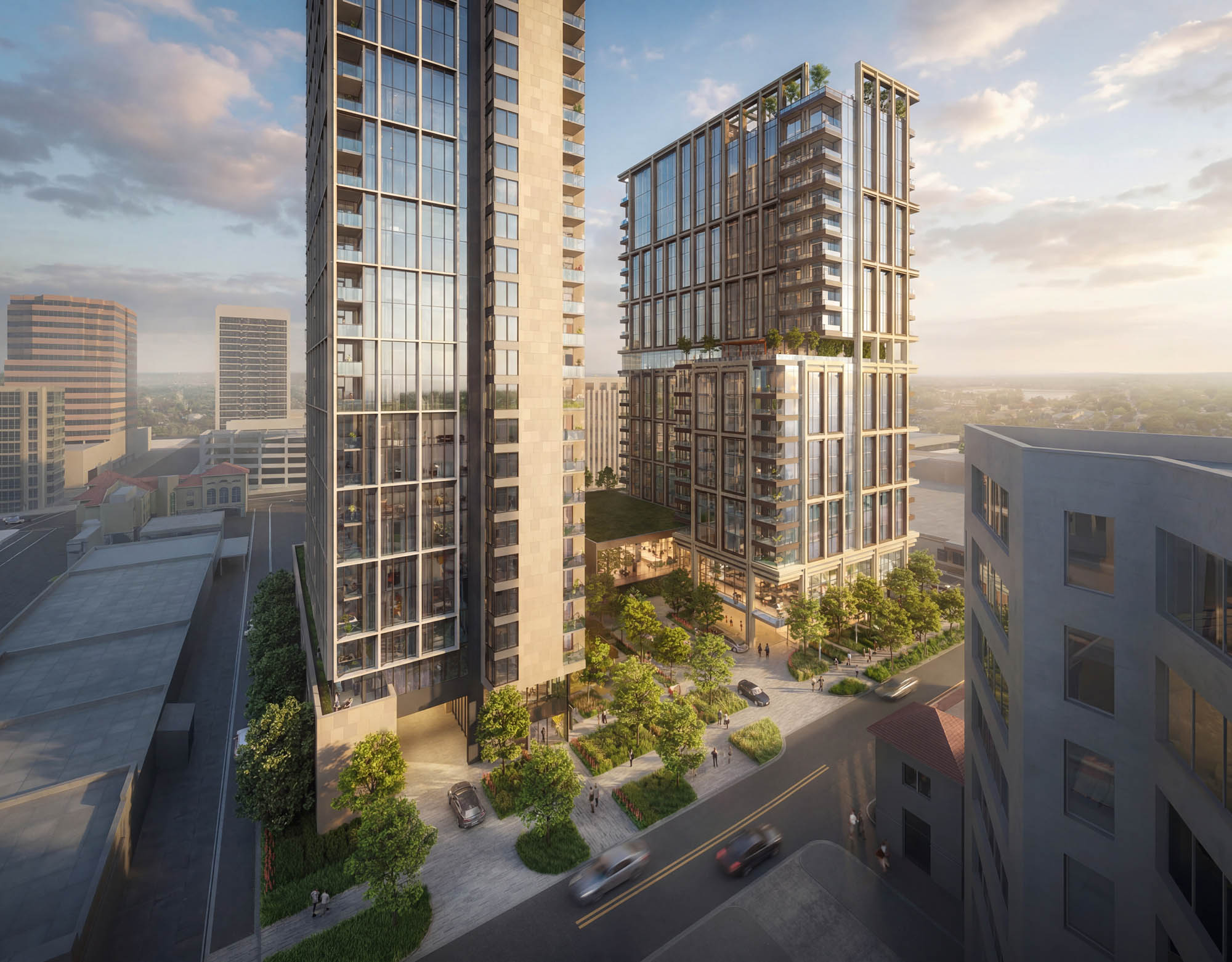
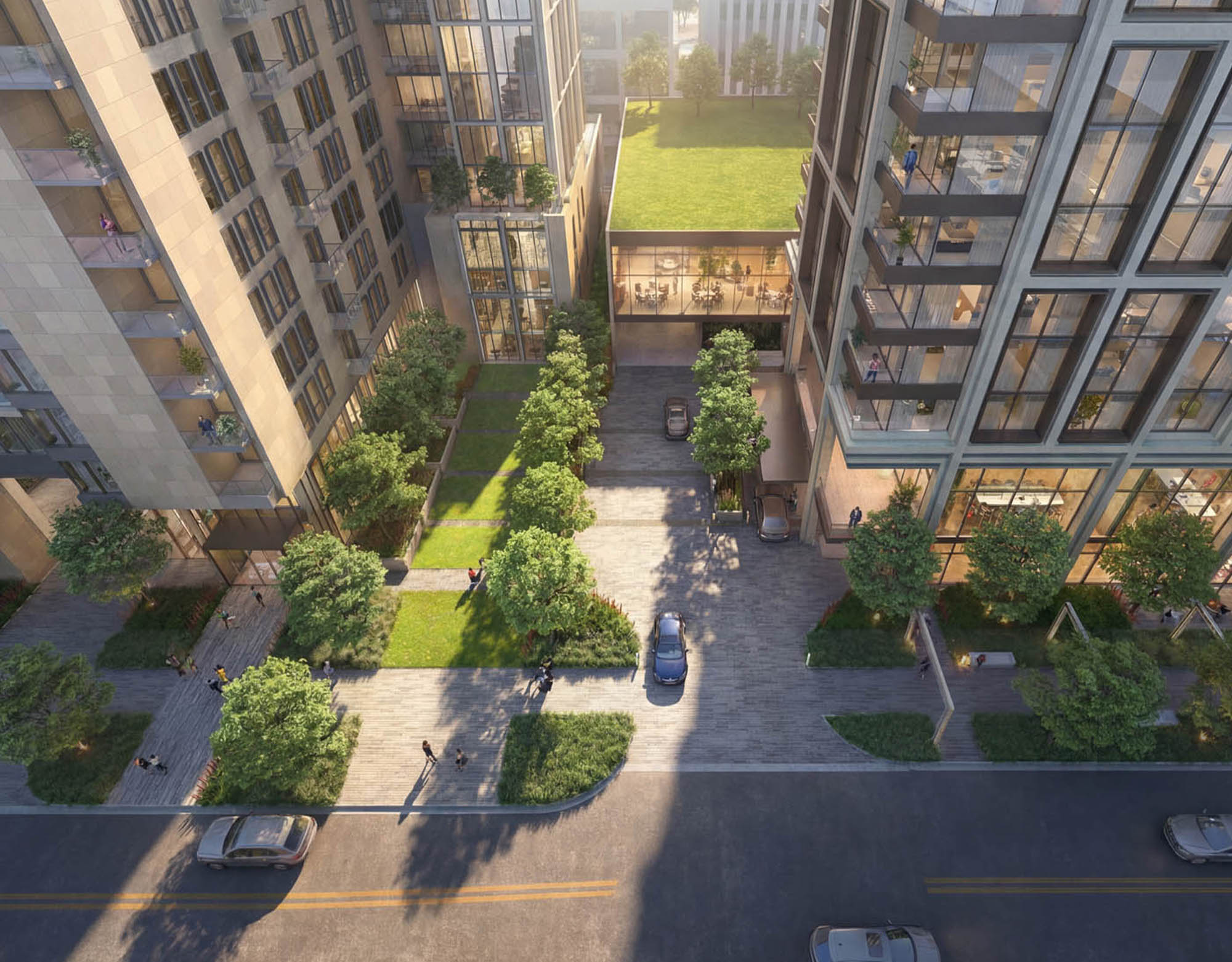
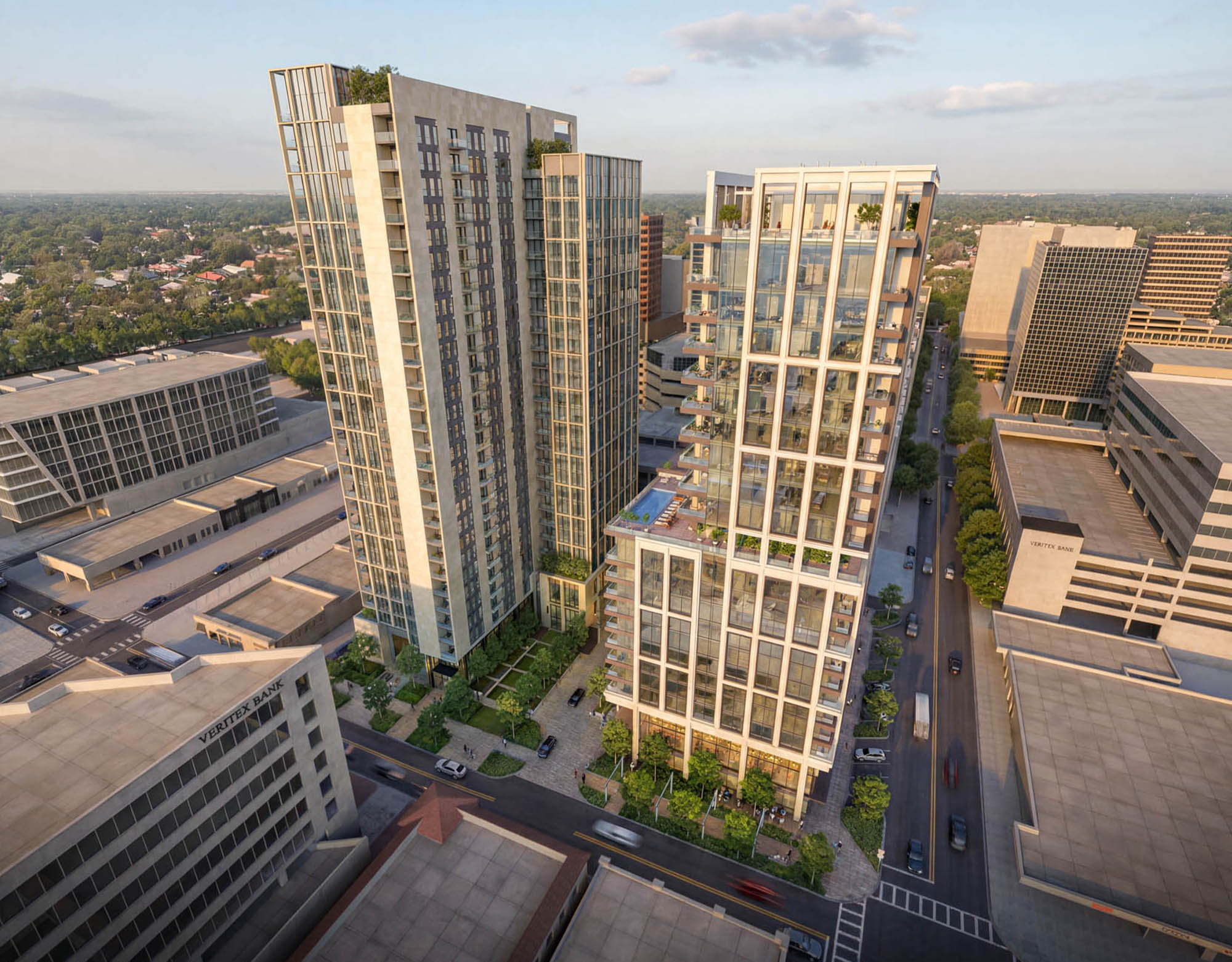
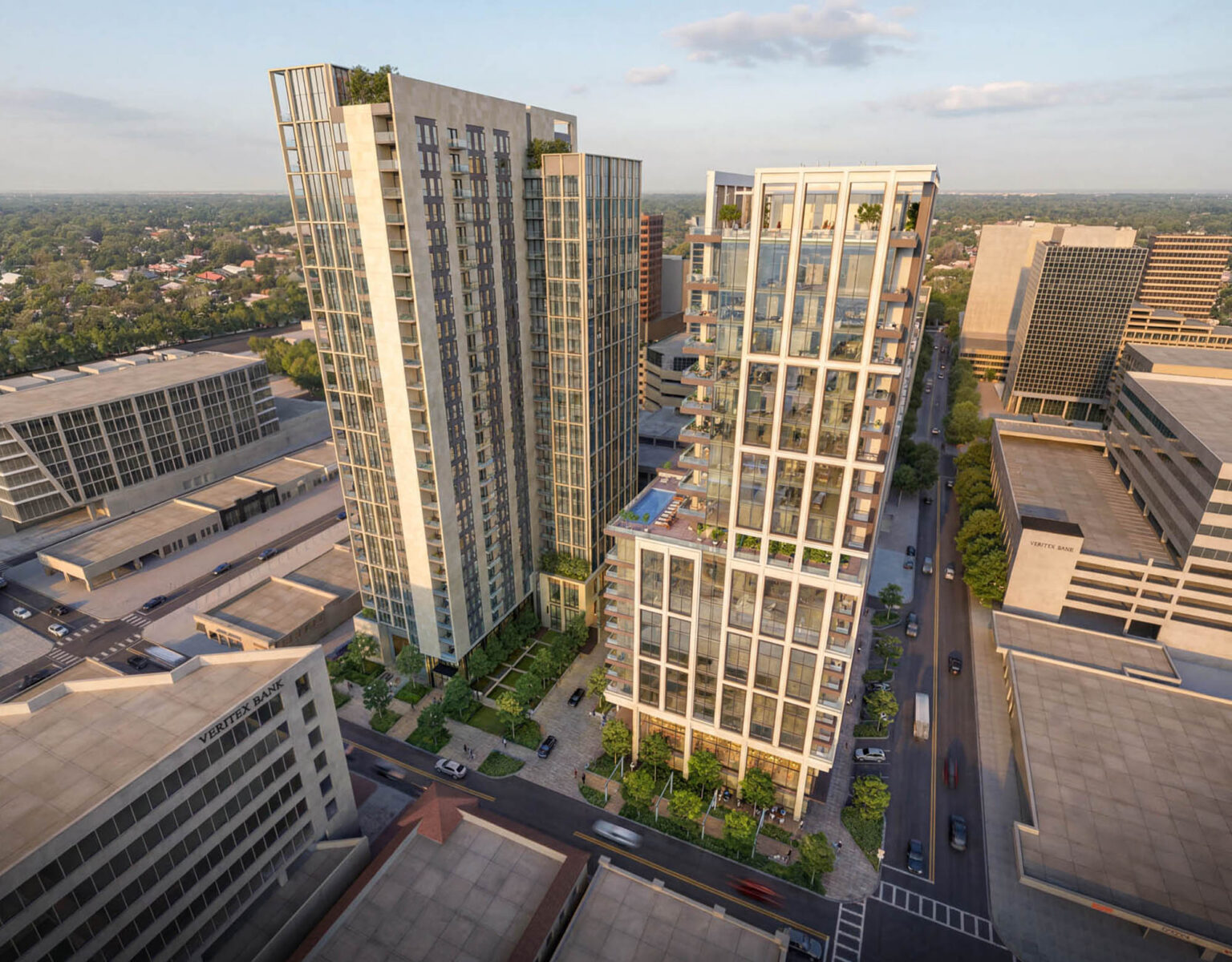
The Westchester brings a neighborhood-first approach to one of the most active districts in Dallas, creating a welcoming apartment community anchored entirely in everyday human experiences. At its core, the project focuses on how people interact with the streetscape from the ground up. By moving all resident parking completely below grade, the ground level is given back to the public realm. Wide sidewalks, heavy tree canopy, and a vibrant activity lawn replace what could have been asphalt, creating an inviting, walkable green pocket where neighbors can gather, walk dogs, and sit outside. The building invites the neighborhood inside with a double-height leasing lobby and fitness space, using large windows to stay connected to the energy of the sidewalk rather than feeling closed off from it.
Bringing this vibrant destination to life required a unique, border-free partnership. Working alongside our client, Burk Interests, the design team collaborated in tandem with Rosebriar Properties and the architects at HKS, who designed the companion hotel and condominium tower directly to the north. SWA led the landscape architecture, designing a continuous green ribbon that seamlessly stitches the two separate properties together. This collective process transformed two individual plots into a unified, human-scale destination centered around shared community spaces.
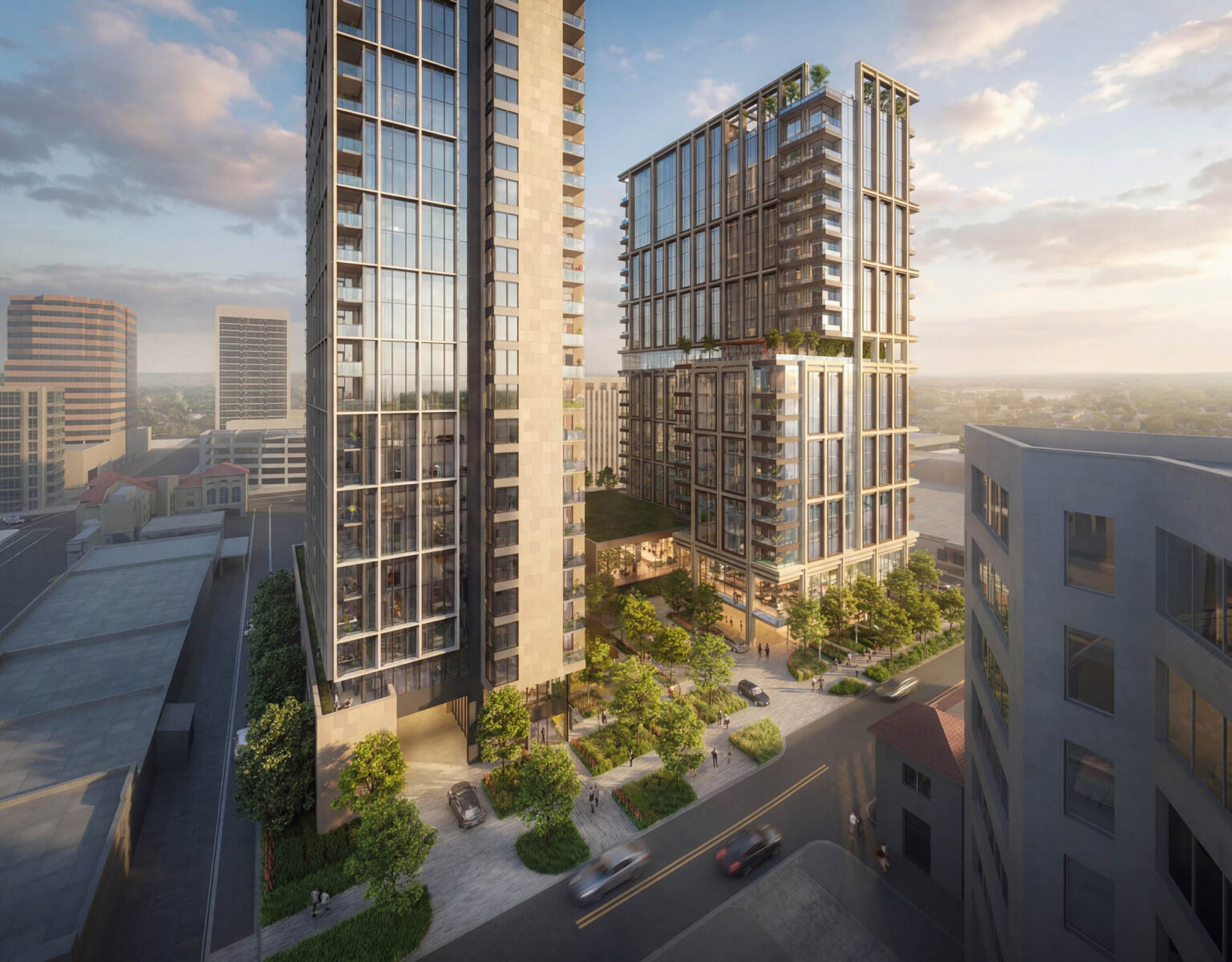
The Westchester occupies a 0.76-acre site along Westchester Avenue and provides 255 homes to the Preston Center neighborhood. The project was made possible by a successful zoning change achieved through close collaboration with city planning and local residents to establish new height limits for the district. The physical layout of the building and its underground parking was designed as a direct response to these newly established height rules and the residential proximity slopes that protect the surrounding neighborhood. The final plan integrates a shared half-acre of open public space between the two new structures, featuring an exterior facade of precast concrete, glass, and metal panels meticulously arranged to capture natural light and views.