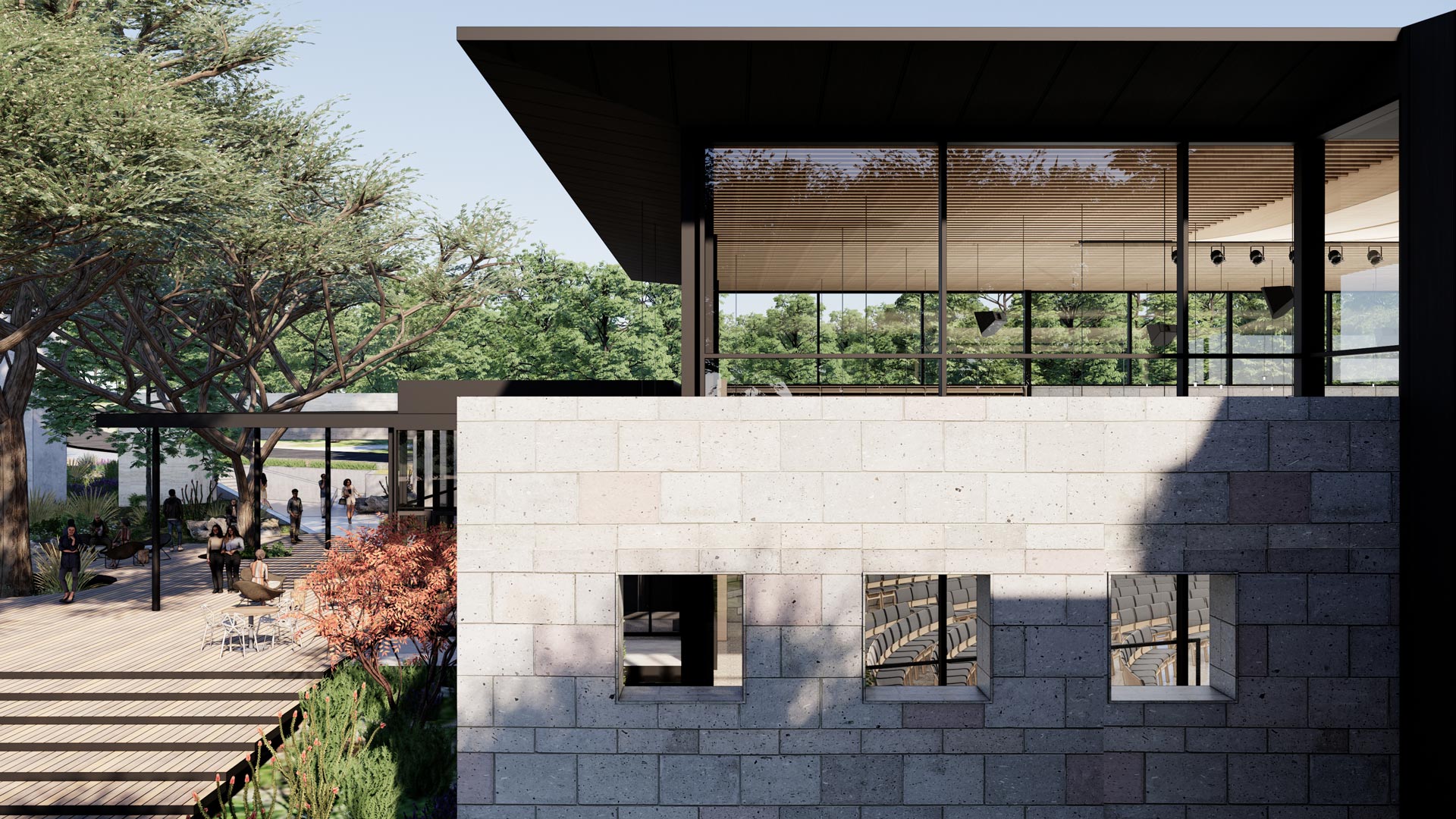
Concordia University Texas had long desired a purpose-built chapel—one that could serve as the spiritual heart of campus without interrupting the daily life unfolding around it. The challenge was to design a sacred space that honored Lutheran ideas of nature and grace while preserving the site’s steep topography, heritage oaks, and endangered wildlife habitat. Relocating the chapel from its originally proposed site, the team embedded the new building within the existing stone ruins of an outdoor classroom—transforming an overlooked area into a central destination for reflection, worship, and gathering. By nesting a transparent glass volume within these reclaimed Adoquin walls, the design creates a layered experience that reveals itself gradually: solid giving way to light, earth opening toward sky. This interplay of permanence and transcendence, enclosure and openness, reflects both the theology that inspired it and the environmental sensitivity that shaped it.


The site selected for the chapel was a quiet, underutilized outdoor classroom framed by existing Adoquin walls and surrounded by mature oaks, rugged topography, and exposed bedrock native to the Texas Hill Country. Tucked away from the campus core, the area was rich in ecological and symbolic potential but presented unique constraints, including sensitive aquifers, protected species habitats, and dramatic elevation changes. Rather than impose a structure upon the landscape, the design team allowed the contours of the land to guide every decision—preserving the character of the ruins, threading between tree canopies, and embracing the site’s organic complexity. Early site studies revealed an environment shaped by erosion, growth, and memory—a place already rooted in story, awaiting a new chapter.
The existing outdoor classroom provided for a small ancillary room and large exterior lawn that was well suited for education.
The open space in the outdoor classroom was perfectly sized for the new chapel space and provided one of the only spaces clear of the legacy tree canopy.
The existing Adoquin stone walls that encapsulated the classroom create as a screen to the chapel and worship space. The undulating walls along the drive are reminiscent of the geology of the adjacent escarpment and provide space for restrooms, brides room, prayer room, and other support functions.
The chapel was envisioned as a light and transparent space for connection to nature and faith; providing a visual opportunity for meditation and contemplation in support of the Lutheran concept of Two Kingdoms, bridging the tangible world of nature with the transcendent realm of grace.


Site Plan
1
New Chapel
2
Student Center
3
Classrooms / Offices
4
Pond
5
Dining Hall
6
Parking
7
Library
8
Assembly Hall
9
Drive
10
Welcome Center
The design of the Chapel is deeply informed by the ecological sensitivities of its Hill Country setting, where mature trees, underground aquifers, and protected species coexist in a delicate balance. From the outset, the project team prioritized preservation—relocating the building to avoid removing heritage oaks and disturbing spring-fed channels that traverse the escarpment. Careful coordination with civil and landscape consultants ensured that all interventions—paths, foundations, and gathering spaces—minimized impact to root zones and natural drainage. These decisions reflect a deep commitment to environmental stewardship, protecting habitats for the golden-cheeked warbler, native salamanders, and other species while safeguarding water quality across recharge-sensitive terrain. Throughout, the architecture defers to the land, reinforcing a message of humility, resilience, and respect.
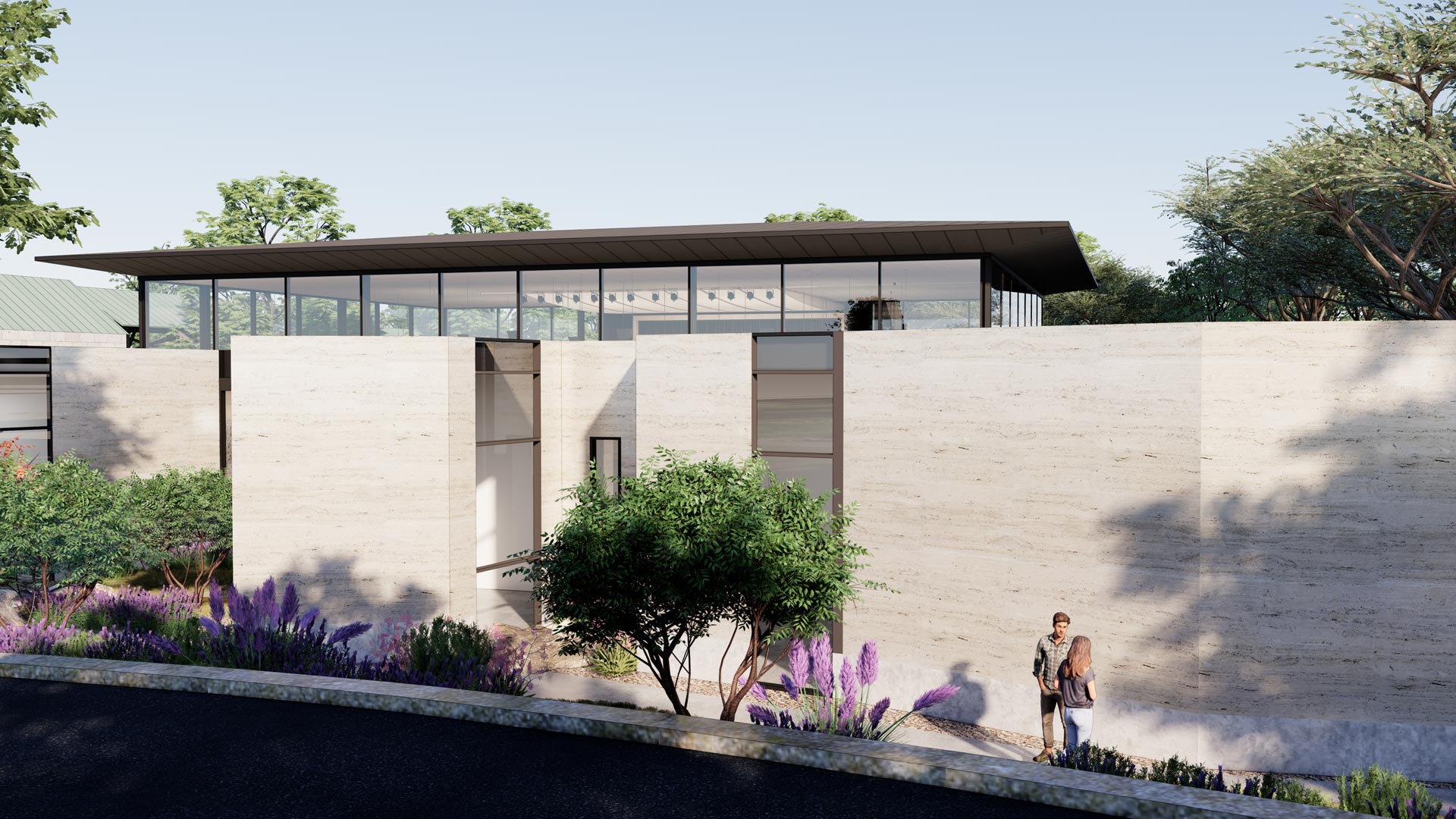


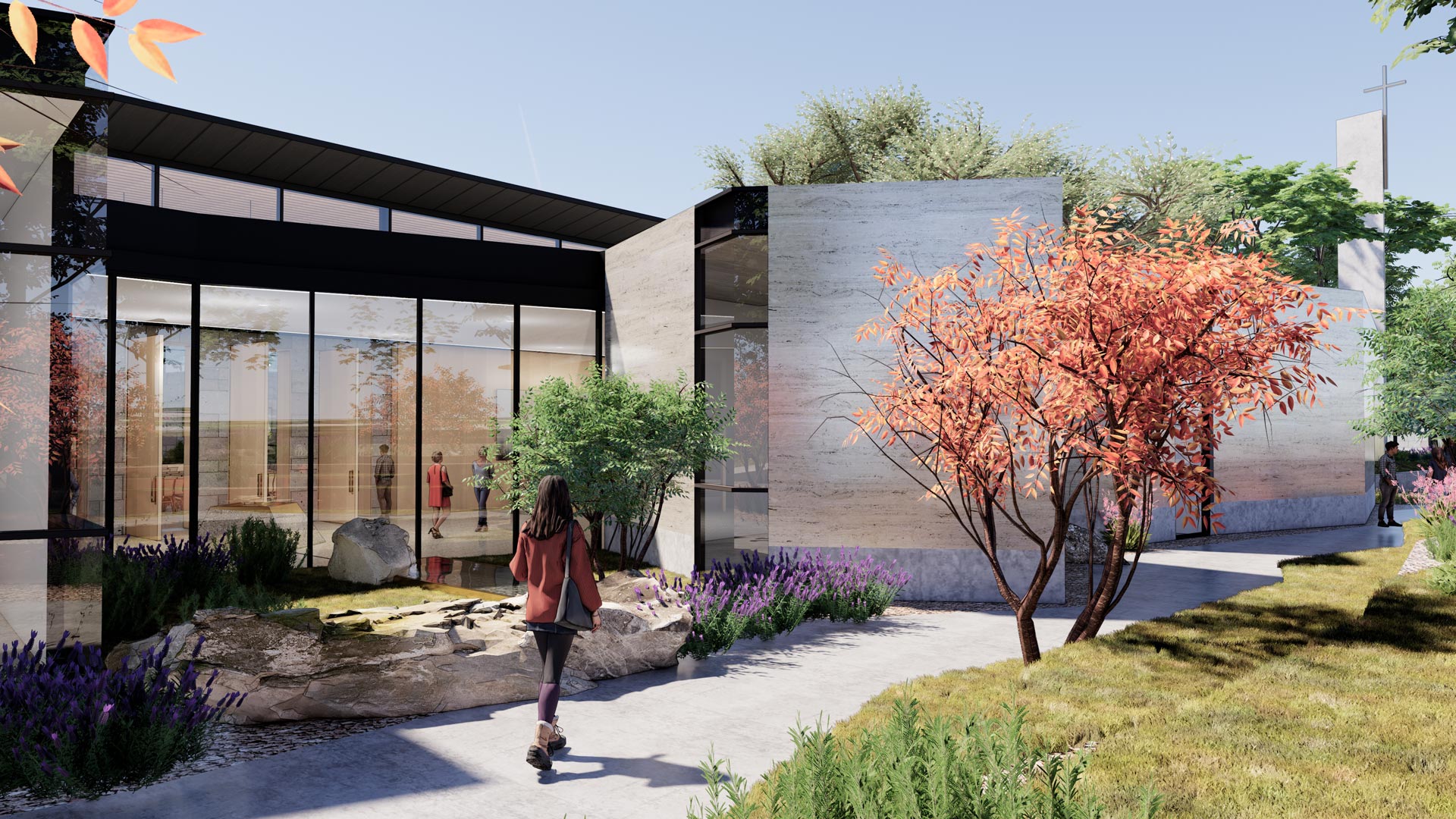
The arrival sequence was choreographed to create a gradual transition—from the rhythm of campus life into a space of reflection and reverence. Visitors approach along a winding path edged by newly introduced Adoquin site walls, which undulate in response to the natural contours and geological character of the escarpment. These walls guide movement gently downhill, weaving between preserved trees and forming a series of thresholds that filter light, sound, and view. Inside, the chapel’s plan is organized as a procession: a compressed entry gives way to a luminous worship space at the heart of the building. Support functions are tucked behind the perimeter walls, allowing the central glass volume to remain visually and symbolically distinct. This spatial rhythm balances compression and expansion, enclosure and openness—grounding visitors in the landscape while drawing their gaze upward.


Floor Plan
1
Worship
2
Commons
3
Restrooms
4
Cafe
5
Bride’s Room
6
Organ
7
Chancel
8
Welcome Center (Existing)
9
Utility
10
Green Room
11
Elevated Deck
12
Garden Wall (Existing)
13
Parking
15
Connective Plaza
14
Drive
The chapel’s floor plan reflects a careful negotiation between sacred presence and daily campus activity. While envisioned as a central landmark, the building was intentionally designed to integrate seamlessly into student life. Approachable from the dining hall, admissions office, student center, and northern parking lot, the chapel functions as both a destination and a point of connection. Circulation paths meander beneath preserved tree canopies, guiding visitors toward a floating community deck that links directly to the chapel and adjacent coffee shop. This site-responsive plan reinforces the project’s conceptual grounding in both the physical and the transcendent—anchoring the chapel in the heart of the campus while maintaining its spiritual distinction.
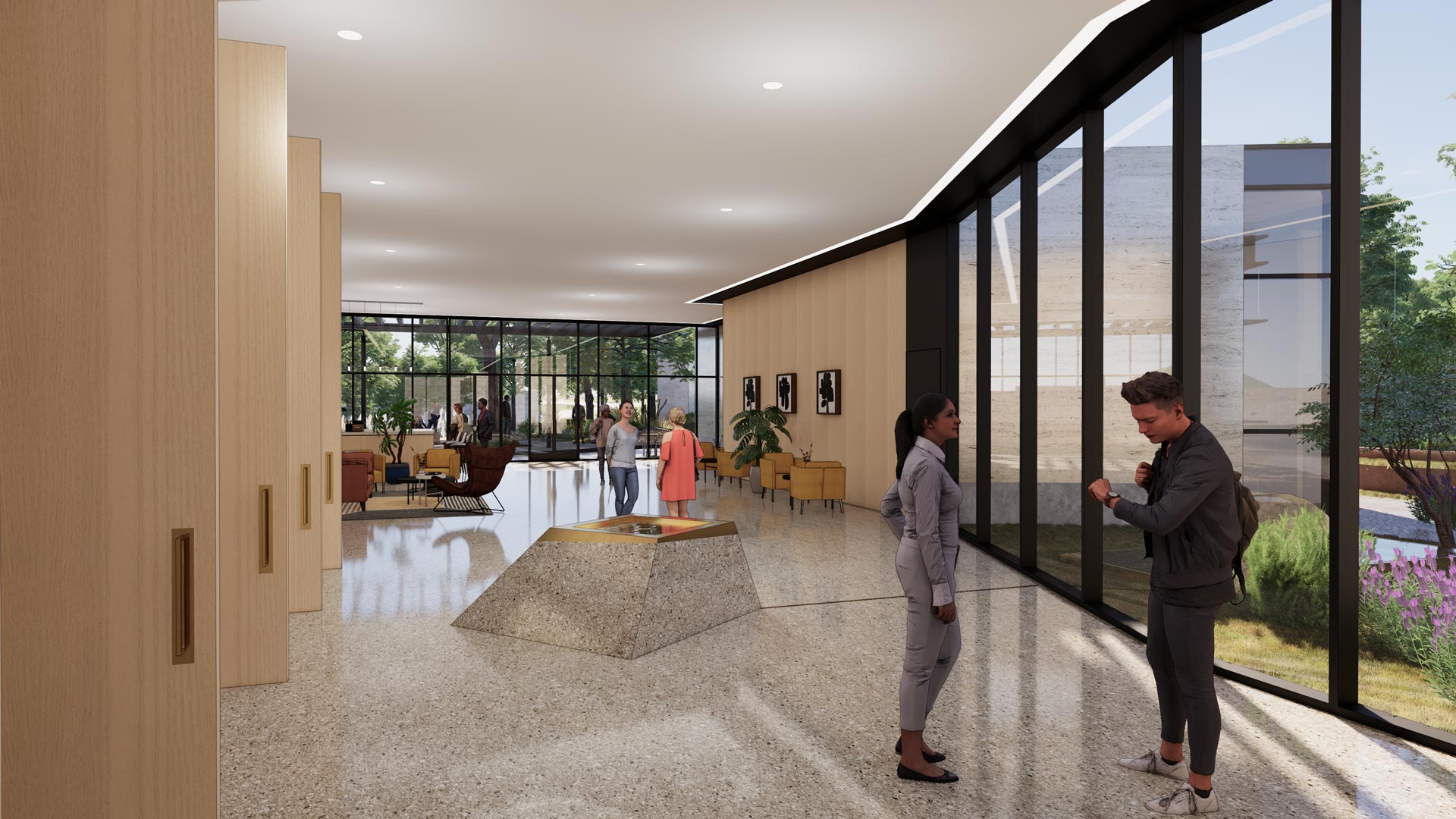

Conceived as both a sacred destination and an everyday gathering place, the chapel’s lobby offers a welcoming environment that invites participation across the entire campus community. Whether arriving for worship, pausing between classes, or meeting with friends, students and faculty encounter a space that balances reverence and inclusivity. Warm finishes, comfortable seating, and curated artwork—including a restored stained-glass window and donor wall—signal that this is a space for all, regardless of faith tradition. The adjoining café and outdoor deck extend that invitation further, reinforcing the chapel’s role not as a remote sanctuary but as a lively threshold where spiritual life and student life intersect.

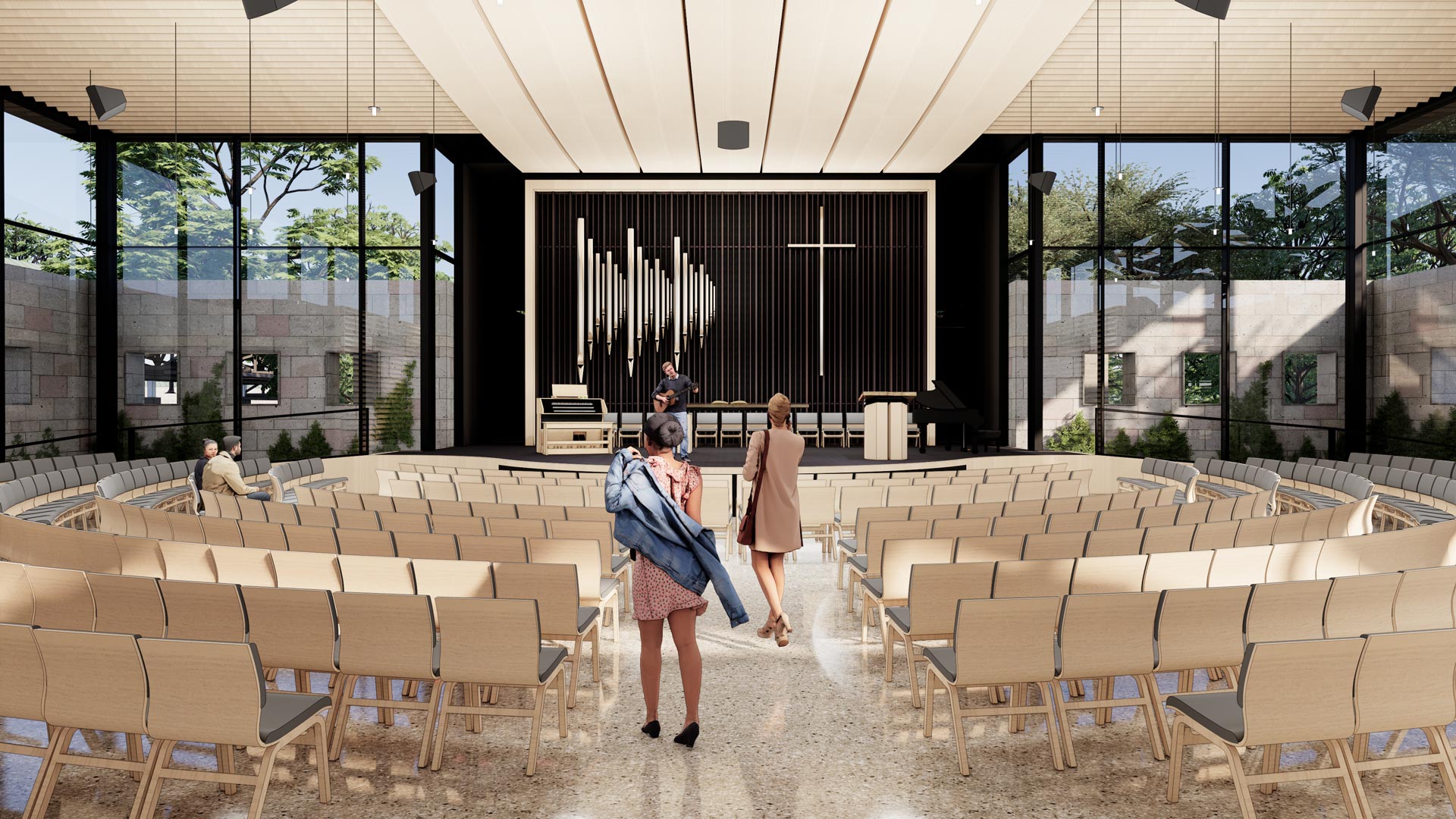
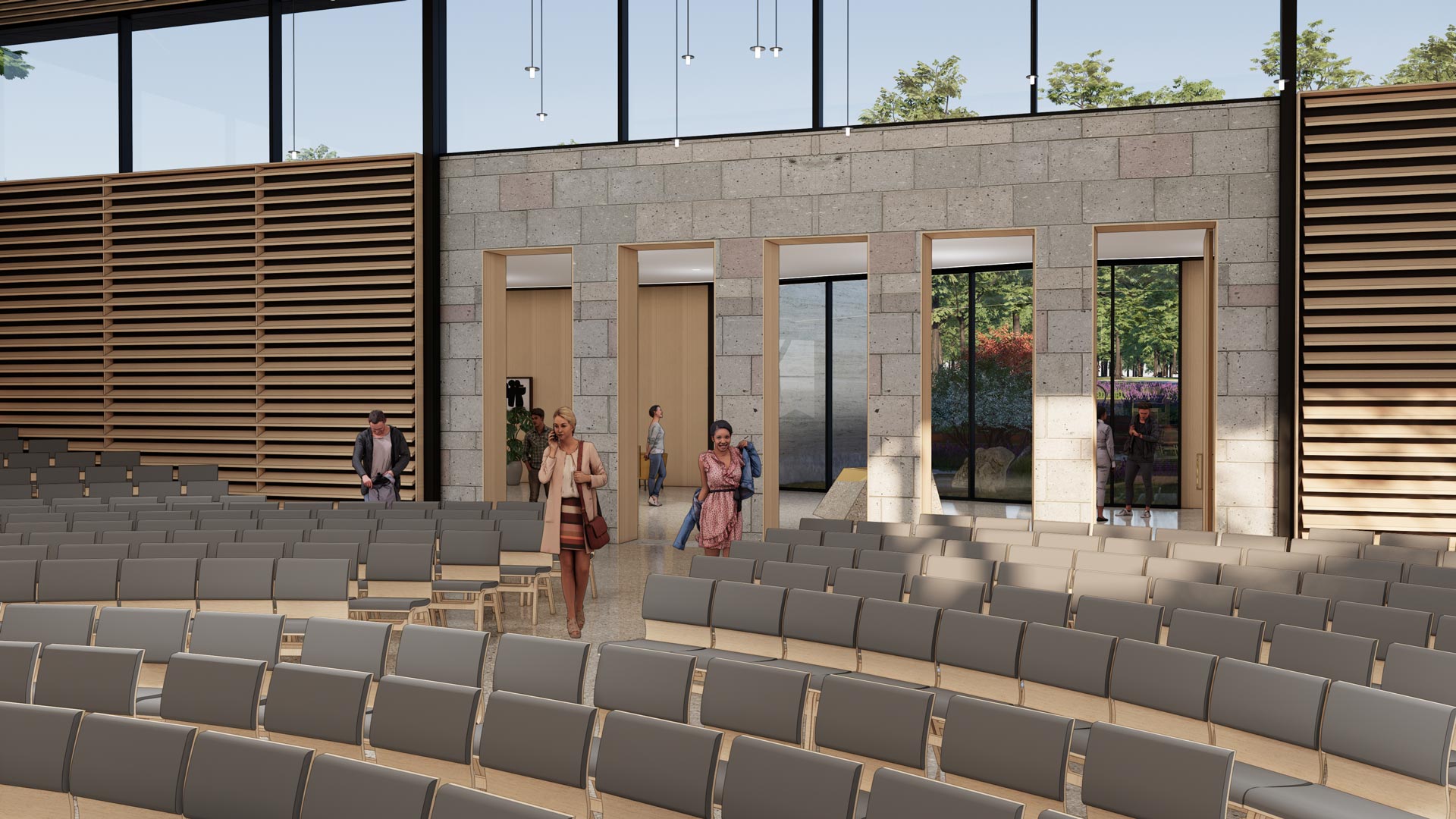


The worship space itself centers on a design language of quiet revelation. Nestled within the preserved Adoquin ruins, the chapel’s glass enclosure appears both grounded and ethereal—shielded by history while open to sky and canopy. A restrained palette of stone, wood, and glass establishes a calm atmosphere, while the fan-shaped seating plan subtly reinforces unity and communal focus. Light enters softly through vertical glazing, its quality shifting throughout the day. This ever-changing interplay of light and material fosters reflection, inviting visitors to engage with the sacred in a way that is deeply personal yet shared.
Tuning a Sacred Space
Sound was treated not as a technical afterthought, but as an architectural driver in the chapel’s design. The acoustics had to accommodate the spoken word, choral music, instrumental performance, and moments of stillness alike. The chapel’s angled glass walls diffuse reflections without sacrificing transparency, while concealed acoustic curtains can be lowered to adapt to different liturgical or musical needs. A dedicated mechanical basement supports the pipe organ, whose bellows and components are housed beneath the worship space. Far from being ornamental, the organ is fully integrated into the architecture—its pipes positioned behind the chancel wall like a sculptural instrument of praise. These acoustic strategies ensure that the space is not only seen as sacred, but heard as sacred—resonant, adaptive, and alive.

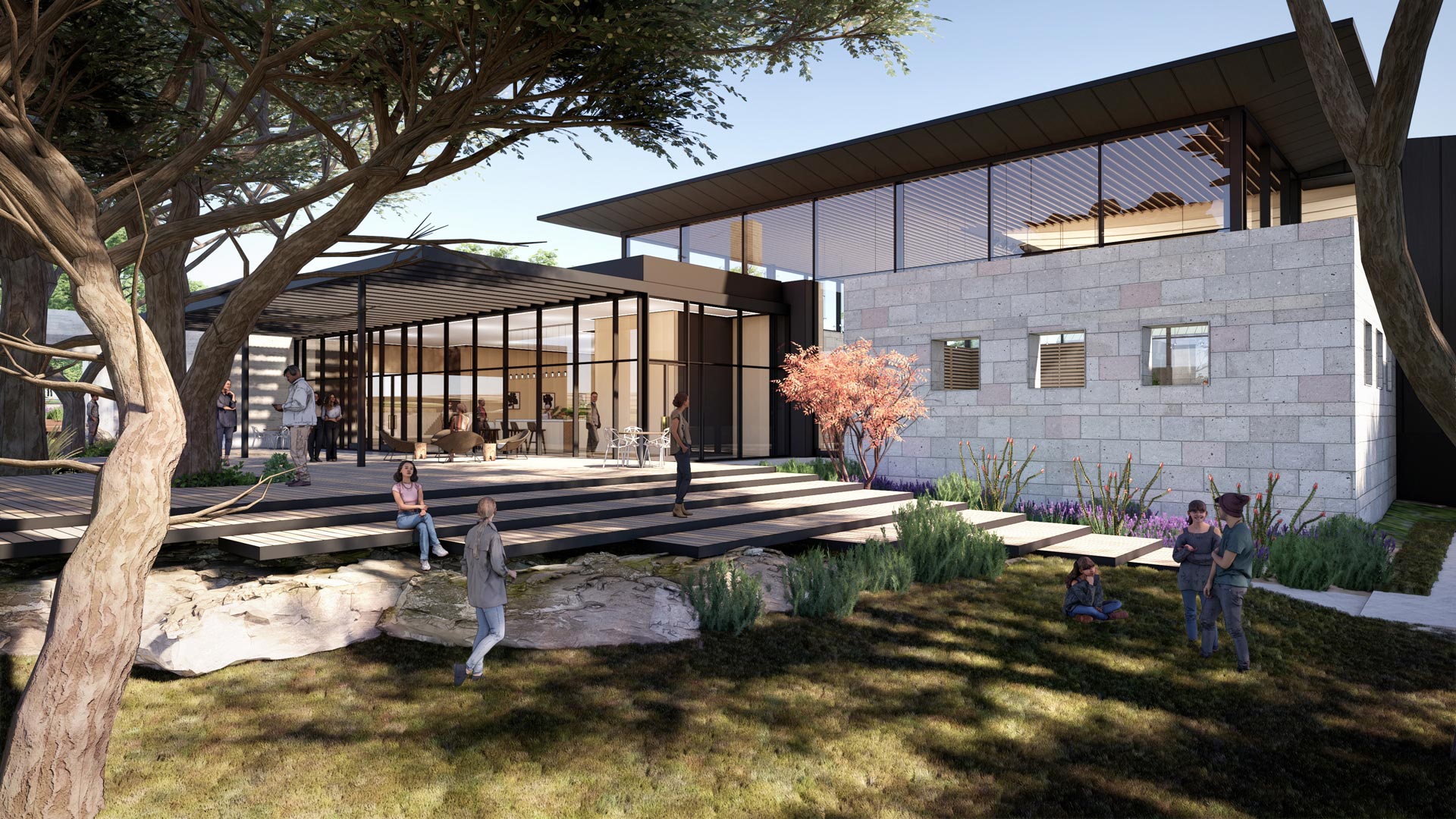

The outdoor patios surrounding the Chapel extend its presence into the landscape, offering spaces for informal gathering, quiet reflection, or community events. Slightly elevated above the ground, these wooden decks appear to hover above the terrain, allowing air, light, and vegetation to move freely below. This floating condition minimizes disruption to existing tree roots and preserves the site’s hydrology—essential for maintaining the ecological balance of the Hill Country environment. In a campus defined by its walkability and connection to nature, these transitional zones between building and landscape provide moments of pause that are as essential to the project’s success as the sanctuary itself.